
Training
Environment
Training opportunity and philosophy
The lab is built around a simple idea: people who want to do interesting science should have what they need to do it. That means real intellectual room to develop your own questions, resources to pursue them, and a community of people who will help you think hard and have a good time doing it. Capability and contribution matter more than rank. We hold a high bar for rigor: clear questions, careful experiments, honest interpretation, finished work. We also hold a high bar for collegiality, because science of this kind is hard to do alone, and because the lab is more fun when people genuinely look forward to seeing each other in it.
Two features of the lab make this kind of training possible. The first is unusually flexible funding — currently an NIGMS R35 MIRA — which means the lab is not committed to any single project area and trainees have the latitude to develop their own programs alongside the lab’s ongoing work. The second is unusually self-sufficient infrastructure: lab-dedicated microscopes (including super-resolution microscopes, laser spinning disk and others), our own fluorescence activated cell sorter, a 10X Genomics platform, cell culture capabilities and a PI-managed fish facility. This means freedom to try new things and pursue outside-the-box ideas, without having to schedule long in advance, compete with other labs and departments or worry about hourly pricing in core facilities.
Training experiences in the lab typically include one-on-one meetings with Dave every week or every other week to discuss observations and ideas, on-going projects and future plans. An open-door policy and frequent presence in the lab itself means plenty of opportunity for ad hoc meetings. Additionally, we all use Slack to stay in the loop, share observations and ideas, and get advice. Lab meetings consist of round tables every other week, in which all lab members share recent findings, obstacles, etc., receiving suggestions from the whole group. In alternate weeks individual lab members present, typically in one of three structured formats: extended literature reviews on topics of potential research interest, whiteboard logistics talks that walk through hypotheses, predictions, controls, and contingencies before work gets underway, and conference-style data talks for developing narratives, pulling together findings and developing best practices in science communication. Beyond the lab, trainees participate in a Cellular Dynamics and Genomics Research Group meeting (below), and seminar series in Biology and Cell Biology.
There are also plenty of opportunities for trainees to gain teaching and mentoring experience for themselves, contributing to formal courses or working with undergrad researchers; some lab members run their own lab-within-the-lab and even have their own group meetings. Individual development plans are employed and cover scientific goals, training needs and desires and professional growth. Postdocs are encouraged to form advisory committee and grad students are expected to meet with their committees twice per year.
Postdoctoral researchers are supported in developing their own independent research programs and we aim to equip them with the skills needed for getting a position, running their own lab, and navigating an academic career. The goal is to train future colleagues and collaborators, not competitors. In part because our people have creative ideas and a desire for high impact science and training, and in part because Dave has considerable experience in grant writing and reviewing — and has chaired an NIH Fellowship Study Section — postdocs typically receive NIH F32, NIH K99/R00, or other funding, in addition to support from lab grants. The best time to apply for extramural support is before arriving, so we are always happy to discuss possibilities and work with new folks well in advance of moving.


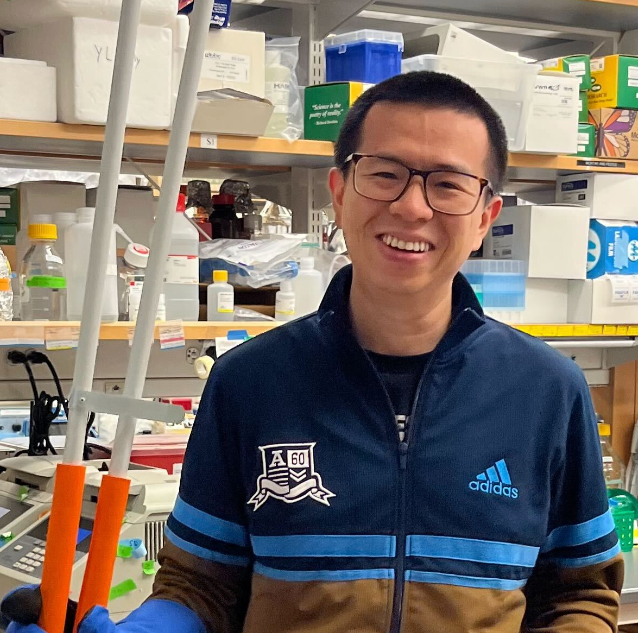
Graduate students are likewise supported in becoming independent-thinking, rigorous scientists. We aim for substantial scientific contributions while earning a PhD, while also developing a solid career trajectory whatever the long-term goal happen to be. Grads typically are supported in part from lab grants but often receive fellowship support as well. Grad students often come in through the intellectually diverse and very flexible Department of Biology PhD program and take the Integrative Biology graduate course sequence, as well as a first-year course, BIOL 8240/8250 Professional Skills in the Life Sciences, co-taught by Dave and Biology faculty member Tracy Larson. The two-semester class covers scientific method, grant writing, project planning, writing and presentation skills, advisor selection, AI use and ethics, scientific communication, time and stress management, and career-building strategies. Prospective grads are encouraged to reach out well ahead of programmatic deadlines as faculty support from potential PIs or rotation advisors is critical for admission decisions in Biology.



Undergraduate researchers have the same opportunities and responsibilities as other lab members, and are expected to contribute data to ongoing projects, earning authorships on lab publications and helping to keep the lab well-funded. We prefer students to start in their first or second year. Dave's undergraduate course, BIOL 3010 Genetics & Molecular Biology, is good preparation for much of what we do. No research experience is required, but motivation, maturity and real-world experience — service sector, construction, military, visual arts, childcare or other — are highly valued.
What we look for at every level is the same: curiosity, care, persistence, and the willingness to be a generous member of a group.






Colleagues
The lab benefits from an unusually concentrated cluster of developmental, cell, and evolutionary biologists in our immediate environment. On our floor of the Physical & Life Sciences Building (PLSB3), our daily neighbors include Ray Keller (morphogenesis and mechanobiology), Rob Grainger (eye development), Ari Pani (development and regeneration), Melanie Worley (regeneration and re-patterning), Dan McIntyre (stem cell–niche interactions), and Eyleen O’Rourke (genetics of metabolism). Also on the floor is the lab of Tracy Larson — a frequent intellectual and experimental collaborator, whose group uses sparrows, fishes, and amphibians to study neural regeneration, endocrine mechanisms, and ethology. The proximity enables joint experiments, cross-lab mentoring and access to a diverse array of knowledge and methodologies.

Across Biology and beyond, the lab interacts with several groups whose expertise complements ours. The lab also interacts with a variety of groups in the School of Medicine and the School of Data Science. For roughly fifteen years the PI has organized the Cellular Dynamics and Genomics Research Group, bringing together labs from Biology and the School of Medicine for data talks and chalk talks — a recurring venue in which trainees present their work to a broader audience and receive substantive feedback before going to meetings or submitting manuscripts.
Lab-dedicated equipment and facilities
A central feature of our program is unusual self-sufficiency. Nearly all the instruments and capabilities critical to our work — imaging, genomics, cell sorting, animal housing — are dedicated to the lab, meaning trainees and staff can use them without scheduling through multi-user cores or competing for time in centralized animal facilities. This makes possible analyses, experiments, and screens that would not otherwise be feasible.
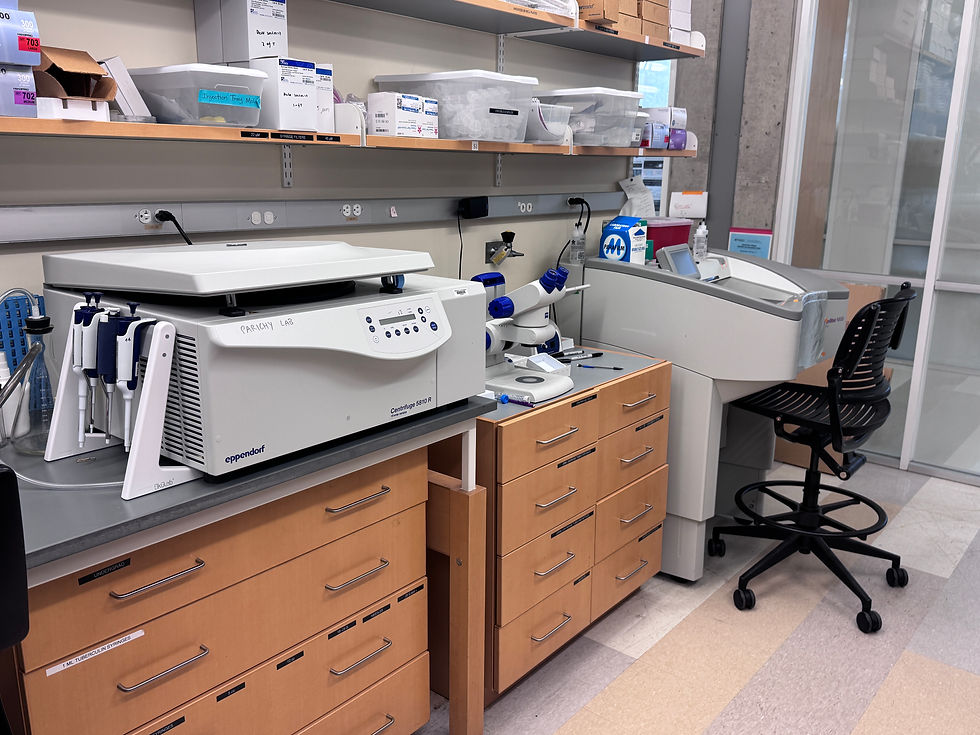
Lab space | The main lab occupies roughly 1,000 sq ft in PLSB with four adjacent dedicated imaging suites. Imaging suites enable flexible-use, short or long-duration live imaging without having to leave our own lab environment. Office space accommodates the PI, trainees, and staff close to the lab, separating computational work from bench areas while encouraging daily interaction.
Animal facility | The lab maintains its own fish facility (~1,400 sq ft), housing up to ~80,000 adult fish. The main system is an Aquaneering recirculating freshwater setup with 28 seven-shelf racks (~2,200 tanks); a separate bank of large tanks (60 ten-gallon aquariums) and three independently temperature-controlled six-shelf racks (~216 tanks) supports heat-shock and other temperature-sensitive experiments. A second room houses two recirculating freshwater systems (32 ten-gallon tanks) for species requiring specialized rearing, plus a marine recirculating system with six partitionable thirty-gallon tanks for clownfish, wrasses, and other reef fishes. Co-located with the main facility are rotifer rearing systems, brine shrimp hatcheries, and injection stations. A separate satellite room (CHEM 101, with fume hood) supports ENU mutagenesis and procedures that benefit from physical separation from the main colony.


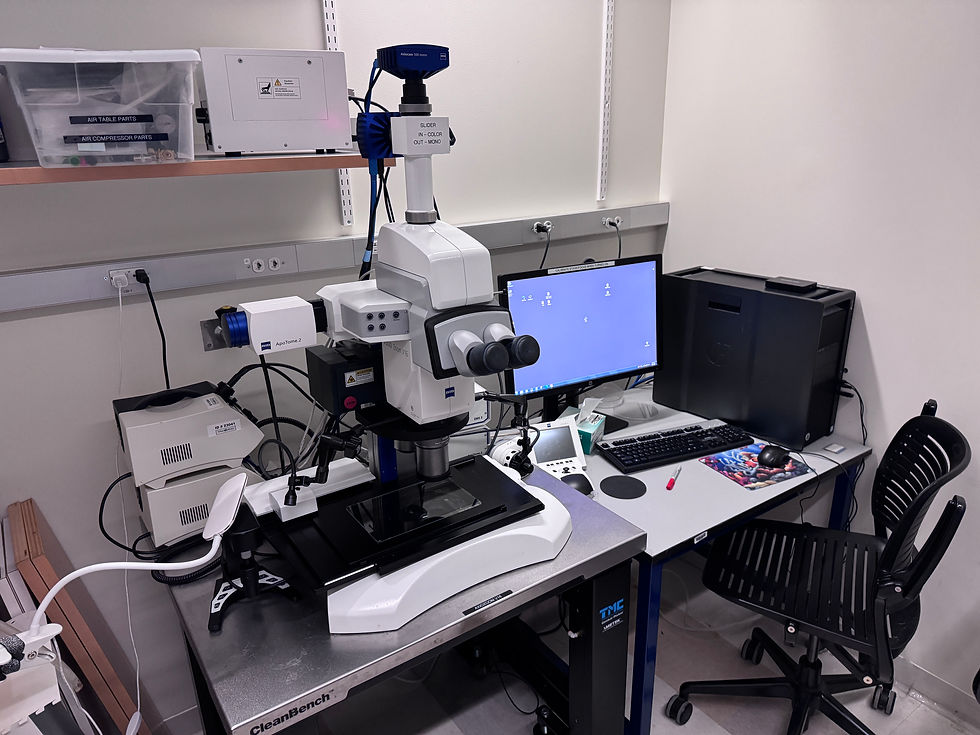
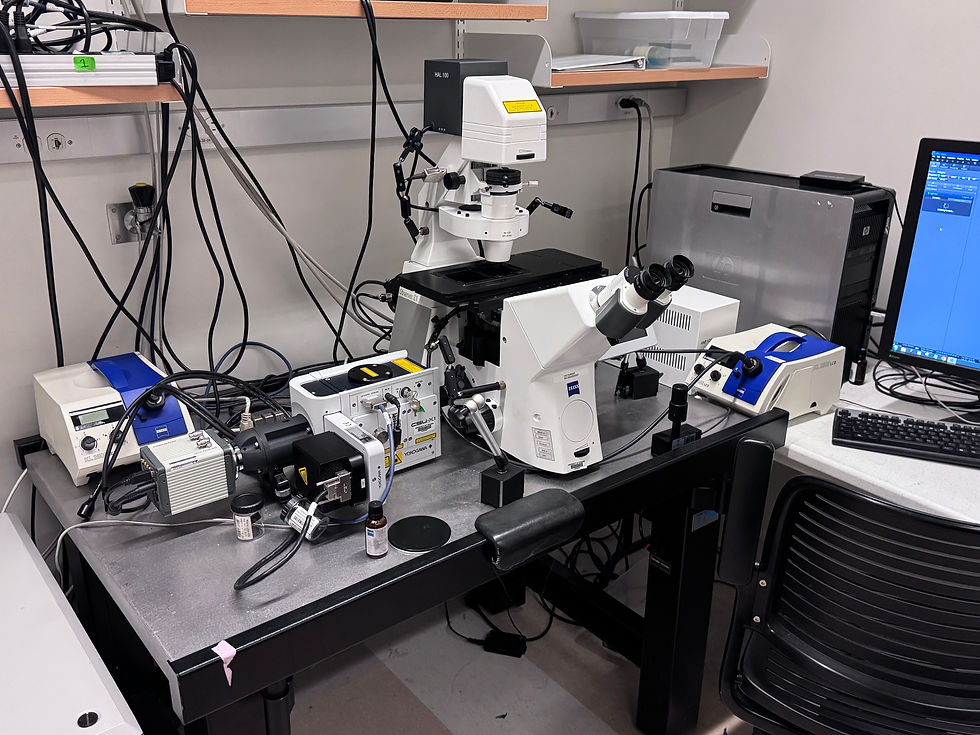
Microscopy and imaging | Two laser-scanning confocals — a Zeiss LSM880 (multiphoton, Fast Airyscan, 2 GaAsP detectors) and a Zeiss LSM800 (Airyscan, 2 GaAsP detectors) — are available for super-resolution imaging,along with a Zeiss Axio Observer with Yokogawa CSU-X1M5000 spinning disk for gentle live imaging with EMCCD and color cameras. Several inverted and upright epifluorescence compound systems (Zeiss Axio Observer, Axioplan 2i) and motorized epifluorescence stereomicroscopes (Zeiss Axiozoom V16, Discovery; Leica M165C; Olympus SZX12) cover routine imaging, sorting, cell transplants, and image documentation. Supporting infrastructure includes picospritzer pressure injectors, Narishige micromanipulators and microinjectors, a laser electrode puller, and microscope air tables for transgenic injections, cell transplants, and electrophysiological work.



Genomics and cell sorting | A Cytek Aurora-CS 4L YG cell sorter (four lasers; full-spectrum profiling with 64 fluorescence and three scatter channels; 96-well plate capacity) supports sorting on fluorophores or autofluorescence. A 10X Genomics Chromium Controller — being upgraded to a Chromium X in mid-2026 — together with a dedicated thermal cycler is used for routine single-cell library preparation. The tissue culture suite includes a ThermoFisher Type A2 biological safety cabinet, two HERAcell Vios 160i CO2 incubators, and an Invitrogen EVOS XL Core cell imager.


Molecular biology and histology | Routine and specialized molecular work is supported by an Intavis BioLane HTI-16Vx in situ hybridization robot, an Epredia Cryostar NX50 cryostat, a vibratome, a paraffin microtome, an ABI StepOne Plus real-time PCR system with HRM, a DeNovix DS-11+ spectrophotometer, a Qubit fluorimeter, multiple thermal cyclers and electrophoresis rigs, an electroporator, hybridization ovens, and the freezer/refrigerator capacity to maintain extensive long-term DNA, RNA, and protein archives.

Computing and software | Lab licenses include LabArchives, CLC Main Workbench, JMP Pro, Adobe Creative Cloud, FileMaker Pro, and a Dropbox Enterprise account with unlimited cloud storage (~200 Tb in current use), supplemented by access to UVA’s Rivanna and Afton high-performance computing clusters for genome assemblies, PoolSeq mapping, and large snRNA-seq analyses.